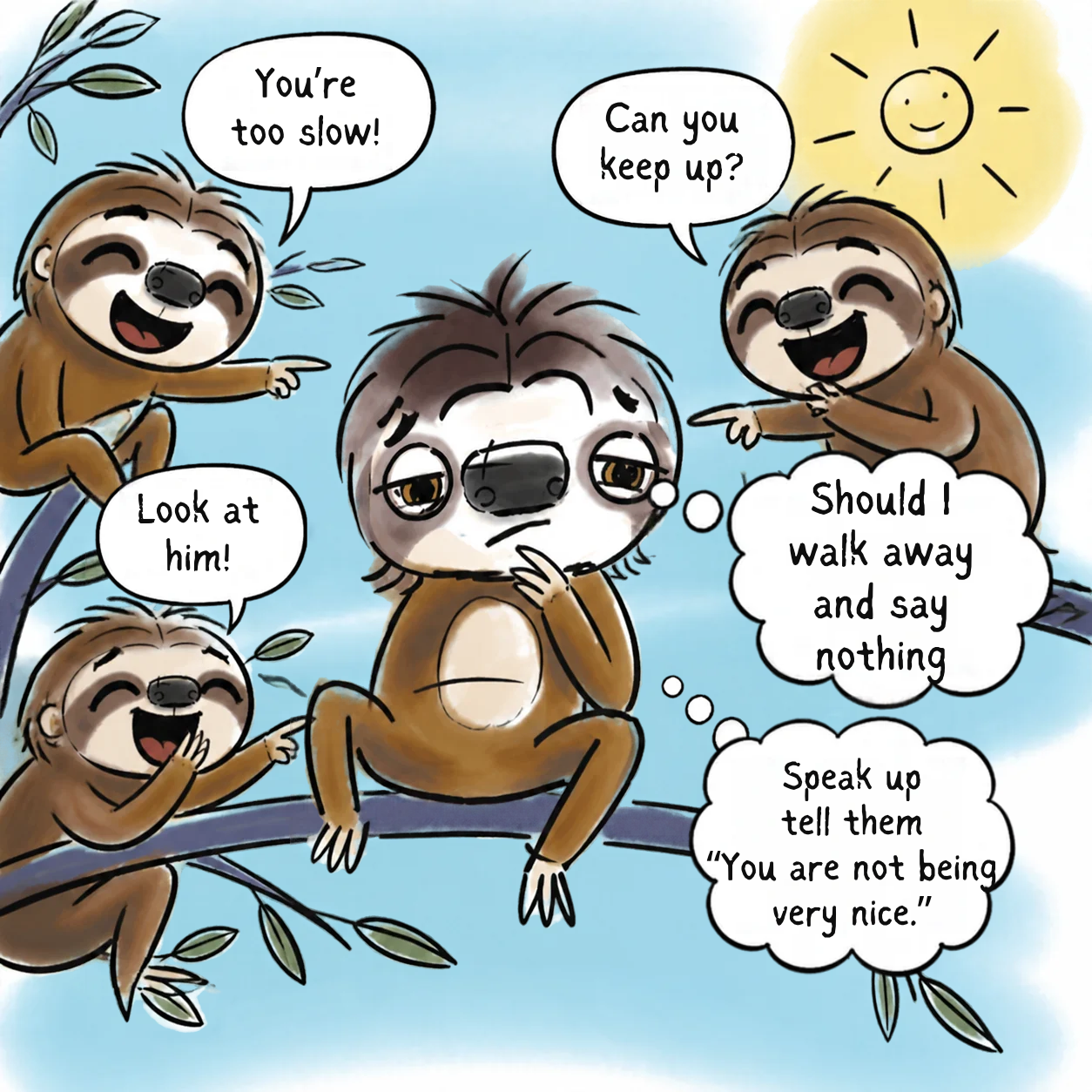
Should We Really Tell Our Kids to Ignore the Mean Kid?
When another child is unkind, maybe "just ignore them" isn't the only lesson we should be teaching. Picture this: Your child comes home from school and tells you another child was mean to them. Maybe someone made fun of their clothes, wouldn't let them play, called them a name, or said something that hurt their feelings. What's our first response? "Just ignore them." "Don't let it bother you." "Walk away. They're not worth your time." As parents, many of us have said these things. We want our children to understand that other people's opinions don't define them. We want them to be resilient, confident, and able to move past uncomfortable situations. But recently, I came across an advertisement for a confidence-training program that challenged this familiar advice. It made me stop and think: Are we actually teaching our children confidence when we tell them to ignore someone who is treating them poorly? Or are we missing an opportunity to teach them something much more valuable?
Ignoring isn't always the same as knowing what to do.
There is absolutely a time and place for walking away. Not every comment deserves a response, and not every disagreement needs to become a confrontation. But there's a difference between choosing not to engage and feeling like you have no other option. When we repeatedly tell children to ignore unkind behavior, we may unintentionally leave them without the tools to navigate it. What happens when the same child makes another comment tomorrow? What if they continue excluding your child? What if your child starts believing being treated poorly is simply something they have to tolerate? Instead of teaching children to ignore the behavior, we can teach them how to recognize it, respond appropriately, and advocate for themselves.
Teach them what they CAN say.
Confidence doesn't mean being the loudest person in the room or having the perfect comeback. Sometimes confidence is simply being able to look someone in the eye and calmly say:
- "I don't like it when you talk to me that way."
- "That's not very nice."
- "Please stop."
- "I was playing here, too."
- "You don't have to agree with me, but you can't be mean to me."
These might seem like small statements, but they give children something important: a voice. We aren't teaching them to be confrontational. We're teaching them that they are allowed to establish boundaries. And just as importantly, we need to teach them they don't have to prove themselves to someone who's determined to be unkind.
Confidence starts before the difficult moment.
One thing I think we sometimes overlook is that confidence isn't something we can expect children to suddenly find when they're being teased, excluded, or embarrassed. It develops through everyday experiences. We build confidence when we:
- Allow children to express their opinions, even when they differ from ours.
- Give them opportunities to make age-appropriate decisions.
- Encourage them to try things that feel challenging.
- Praise effort, problem-solving, and perseverance rather than just the outcome.
- Let them practice speaking up for themselves in everyday situations.
- Remind them that making mistakes doesn't make them less capable or less worthy.
When children feel comfortable expressing themselves at home, they're practicing skills they can eventually carry into the classroom, playground, and friendships.
Sometimes walking away IS the strongest response.
Teaching children to speak up doesn't mean encouraging them to argue, retaliate, or put themselves in an unsafe situation. Sometimes the most confident response is to walk away. Sometimes it's finding another group of friends or recognizing that a friendship isn't healthy. And sometimes it's asking a trusted adult for help. If a child is repeatedly targeted, threatened, physically hurt, or made to feel unsafe, this isn't something we should expect them to handle independently. That's when adults need to step in. Repeated bullying needs more than a lesson in confidence. We can teach children to advocate for themselves while also making sure they know they never have to face these situations alone.
What if we changed the conversation?
The next time your child tells you someone was mean to them, instead of immediately saying, "Just ignore them," consider starting with a few different questions:
- "How did that make you feel?"
- "Has this happened before?"
- "What do you wish you could have said?"
- "What do you think you could do if it happens again?"
You don't have to solve every situation for them. Sometimes children need to feel heard before they're ready to problem-solve. You can even practice different responses together. Role-play a situation and let your child experiment with what they might say. Make it lighthearted when appropriate. Practice gives children a chance to find their words before they need them. Remember, being confident doesn't mean being unaffected. It's okay for children to acknowledge that someone's words hurt.
What Sam the Sloth can teach us about changing the story
When I wrote The Sad Sloth and How He Changed His Story, I wanted to create a story that helped children explore big feelings and discover tools they could use when emotions felt overwhelming. One of the messages behind Sam's story is that we don't always get to choose what happens around us, but we can learn ways to navigate our feelings and experiences. That lesson extends far beyond sadness. Think about a child who is left out of a game, teased by a classmate, or told something hurtful. They might feel embarrassed, angry, sad, or even begin questioning something about themselves. Just like Sam, they may need a little help recognizing what they're feeling and figuring out what to do next. We can't always change how someone else behaves. We can't make every child be kind, include everyone, or say the right thing. But we can help our children develop the confidence and skills to navigate those moments. One way to do that is through stories. Sometimes it's easier for a child to talk about what a character is experiencing before they're ready to talk about something happening in their own life. Reading together can open the door to questions like:
- "Have you ever felt like Sam?"
- "What could you do if someone said something that hurt your feelings?"
- "What would you say if someone didn't let you play?"
- "Who could you talk to if you needed help?"
These conversations don't have to turn into formal lessons. They can happen naturally while reading, playing, or spending time together. There's an important distinction I want children to understand: Changing your story doesn't mean pretending something bad didn't happen. It doesn't mean ignoring hurtful words, pretending you're not upset, or accepting behavior that isn't okay. It means learning that one difficult experience, one unkind comment, or one person's opinion doesn't get to write the rest of your story. That's a message I hope children take away from Sam.
The bigger lesson
I don't think we need to stop teaching our children to walk away from negativity. I think we need to stop making that their only option. We want children who are kind, but also understand that kindness doesn't mean accepting unkind treatment. We want children who can listen to others, but also trust their own voices. We want them to understand that they cannot control what someone else says or does, but they can learn how to respond, establish boundaries, and ask for support.As a physical therapist, an author, and a mom, I spend a lot of time thinking about how children develop the skills they need to navigate the world around them. Not just physical skills, but emotional and social skills, too. We can't write every chapter of our children's stories for them. But we can help give them the tools to write the next one. Confidence isn't teaching a child that nobody can hurt their feelings. It's teaching them that someone else's unkindness doesn't determine their worth. Maybe the next time our child tells us someone was mean to them, we can do more than tell them to ignore it. Maybe we can help them find their voice. And sometimes, that's where changing their story begins. Raising kind children and raising confident children should never have to be two different things.
Marlene Mireles, PT, DPT
Whole Motion Therapy and Wellness, PLLC.The Sad Sloth and How He Changed His Story is a children's book created to help families explore big feelings and discover tools for navigating them.